
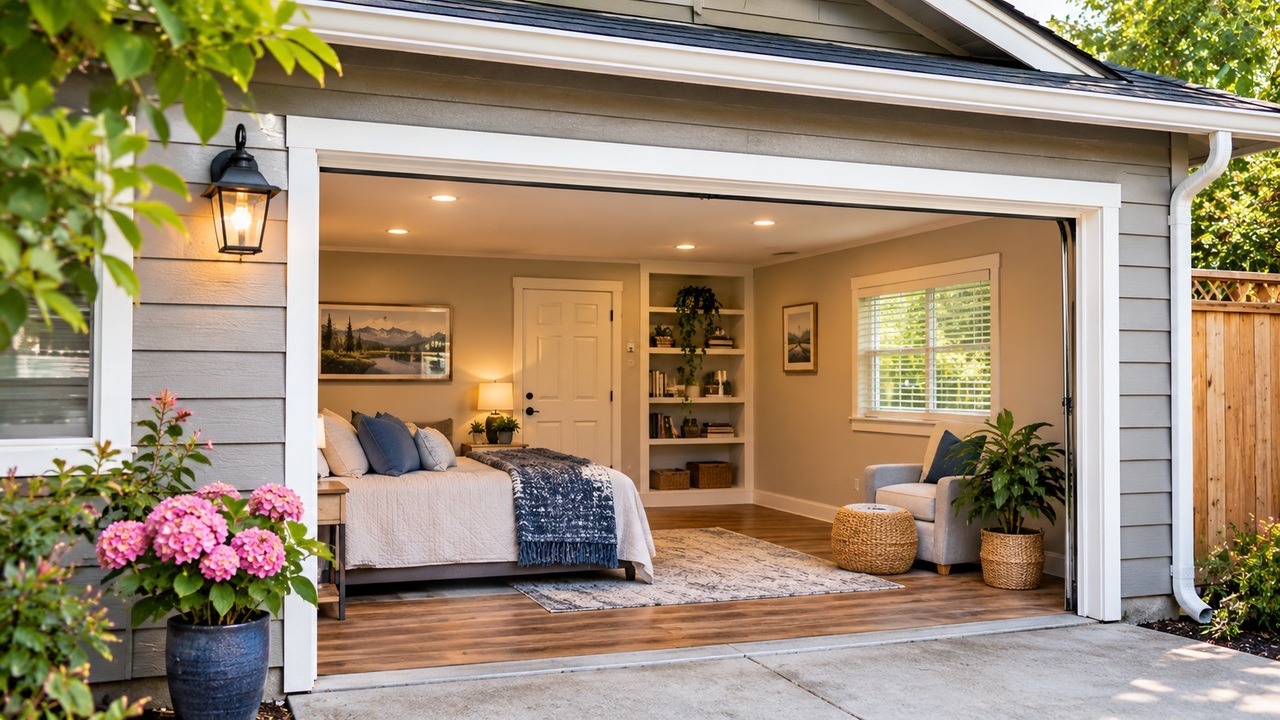
 A converted garage can make a house feel more useful. It might serve as a bedroom, home office, playroom, or guest space. But before you count that room as part of the home’s living area, there is a question worth asking: Was the conversion properly permitted and approved?
For mortgage purposes, the answer can influence how the property is described, appraised, and reviewed. A room that looks finished is not necessarily recognized as legal living space.
Permits and Living Area Are Different Questions
Local building departments set rules for construction, electrical work, heating, ventilation, windows, and changes in a room’s use. A garage conversion may need permits and inspections, especially when the work changes structural elements or adds plumbing. The rules depend on the location and the scope of the project.
An appraiser may also need to determine whether the converted area meets applicable standards for inclusion in the home’s finished living area. A converted garage may be treated differently from the original house, even if it has attractive flooring and painted walls. It is important not to assume that every finished square foot shown in a listing will be included in the appraisal the same way.
How It Can Affect Financing
If the home’s advertised bedroom count or square footage depends on an unpermitted conversion, the appraised value may not match the asking price. A lender may also have questions about safety, marketability, or whether additional documentation or repairs are necessary. In some situations, the conversion may not prevent financing. In others, unresolved issues could delay approval or change the loan options available.
The details matter, and requirements vary by lender and loan program. That is why buyers should avoid relying on a blanket rule about whether unpermitted work is acceptable.
Questions to Ask Before Making an Offer
Ask the seller when the garage was converted and whether permits were obtained. Request copies of permits, inspection signoffs, and any certificates or records required locally. Compare the listing description with public property records, while remembering that records can sometimes be incomplete or outdated. A qualified home inspector can help identify visible concerns, but only the appropriate local authority can confirm permit status.
Talk with your lender early if the converted space is a major reason you want the property. Ask how it might be treated in the appraisal and whether documentation could be required. Your real estate agent can also help you evaluate the home based on its verified features rather than marketing descriptions alone.
A garage conversion may be a wonderful addition. Understanding how it was completed can help prevent a surprise when financing and appraisal reviews begin.

